 visit Auburn.edu
University-city partnership leads to $22 million research facility and specialized advanced manufacturing district in Auburn Research Park
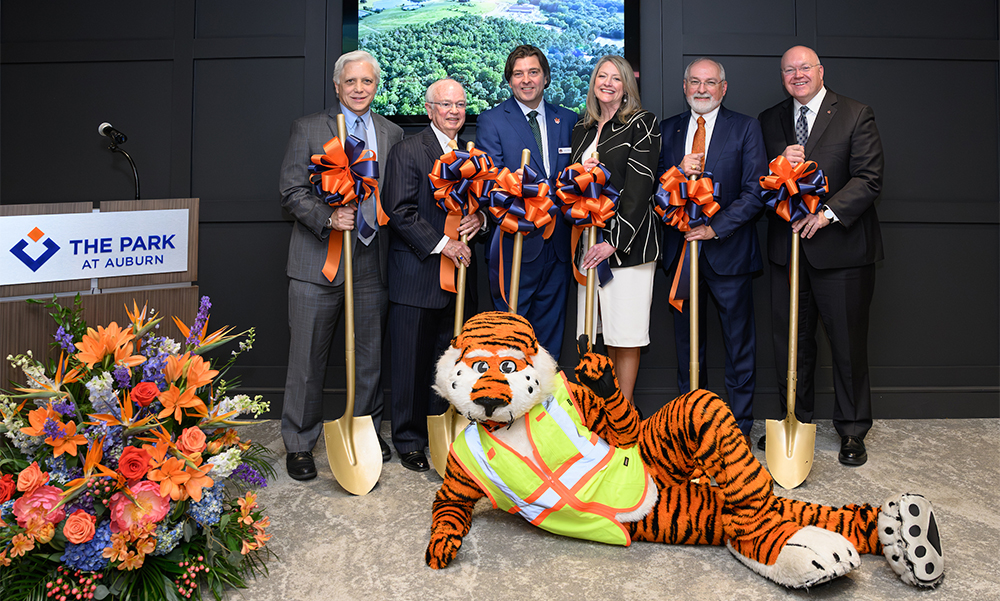
AUBURN, Ala. — Officials from the Auburn Research and Technology Foundation (ARTF), the City of Auburn and its Industrial Development Board (IDB), and Auburn University gathered in the Auburn Research Park (The Park) yesterday to mark the construction of a world-class laboratory and to formally announce the beginnings of a 45-acre advanced manufacturing research district.
 |
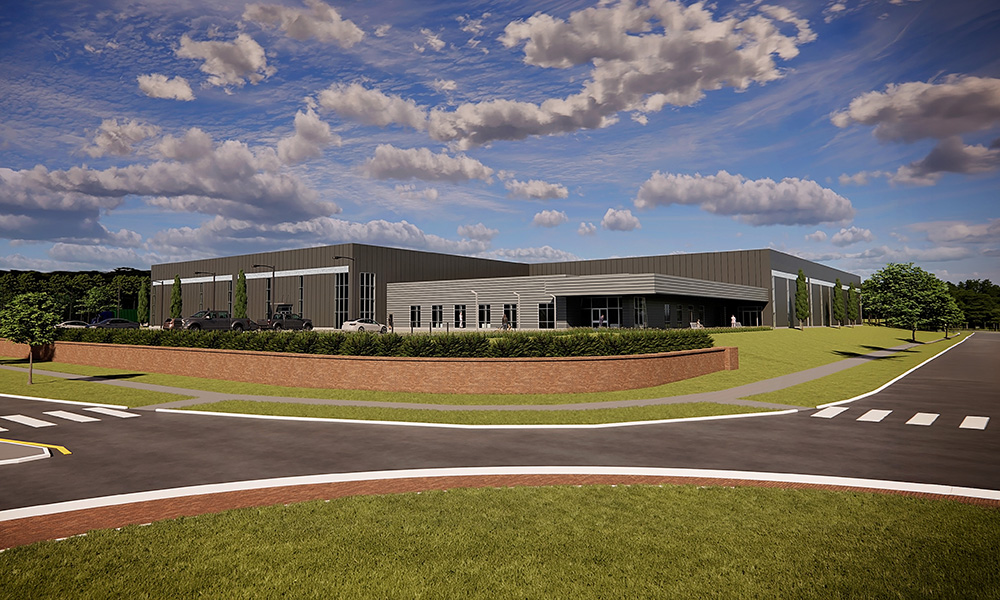
Scheduled to open in summer 2027, the $22 million, 100,000 square-foot facility will house the Auburn University Radio Frequency Identification (RFID) Lab. For more than 20 years, the RFID Lab has focused on advancing and implementing RFID and other emerging supply chain technologies in industry settings including retail, aviation, aerospace, and manufacturing.
“The new facility is a transformational space designed to meet the growing demands of RFID innovation, research, and industry collaboration,” said Justin Patton, executive director of the RFID Lab. “As the technology landscape evolves, this expanded facility allows us to scale our work, simulate complex supply chain environments, and better support our partners by accelerating adoption.
“This dynamic learning environment will also serve as a professional development platform for our students,” Patton added. “They will gain hands-on experience with real-world systems and work alongside industry leaders.”
The RFID Lab began operations at Auburn in 2014. Its work now includes more than 100 students and faculty along with more than 35 research and development sponsors with familiar names like Delta, Boeing, Nike, Walmart, UPS and McDonald's among others.
“The lab has grown by a factor of five over the last five years, and as we expand our scope from RFID to include the many other sensor technologies that are used in the supply chain and advanced manufacturing, this new facility gives us the ability to scale up our operations alongside our industry partners to ensure that Auburn students define the future of how the global supply chain will operate,” Patton said.
 |
The advanced manufacturing research district
The RFID Lab is the first of several facilities slated for The Park’s newly-formed advanced manufacturing research district. Unique in the nation, this research district with its specialized advanced manufacturing focus, will create an environment where the public and private sector can collaborate and even co-locate their R&D work with Auburn experts and students in a wide range of manufacturing technologies, prompting shared discovery and innovation.
These technologies include automation, robotics, AI, digital engineering, lean manufacturing, advanced machining, additive manufacturing, and mass timber production. Promoting economic growth through the reshoring of manufacturing and growth of knowledge-based jobs is a shared goal of Auburn University and the City of Auburn.
Since the 1980s, university leaders and city officials have worked side by side to
recruit knowledge-based jobs to Auburn. In 2006, that work became more focused through
the creation of Auburn Research Park. In 2024, Auburn University, the City of Auburn,
the City’s IDB, and the ARTF formalized their collaboration with an agreement establishing
framework and structure for their joint efforts. The projects celebrated on April
28, 2026, are the direct result of this renewed commitment to partnership.
“The new RFID Laboratory within The Park is an exciting next step to further collaboration
between students, business and industry in an environment that promotes innovation,
research and workforce development,” said Auburn Mayor Ron Anders. “This facility
is a direct result of the partnership between Auburn University and the City of Auburn
and the collaboration between the Auburn Research and Technology Foundation and the
city’s Industrial Development Board. The Industrial Development Board is providing
construction management for the project as well as an avenue for a university bond
issue for financing. I am pleased to celebrate the start of this endeavor and to seeing
its future successes.”
The advanced manufacturing research district will be a blend of university units shoulder to shoulder with industry partners working together to take innovative technologies from the lab to the market. The district will be a place for research, technology development, and rapid prototyping. Shared spaces and equipment reduce costs and allow researchers and businesses to iterate quickly as they move from proof-of-concept to market.
“The RFID Lab is an outstanding example of the types of Auburn research programs that we are recruiting to our new advanced manufacturing research district in The Park,” said Steve Taylor, ARTF president and senior vice president for research and economic development at Auburn University. “The RFID Lab will have Auburn University faculty experts and students working hand in hand with industry to develop and deploy revolutionary supply chain technology. Now, supported by the unique partnership between the university and the city, additional research centers are poised to locate in The Park and make an even greater impact on our manufacturing sectors. I am excited about the collaboration that will occur when our students, faculty and partners join the vibrant hub that is our new advanced manufacturing research district.”
###
About the RFID Lab
A unit within the Harbert College of Business, the Auburn University RFID Lab is a research institute focusing on the business case and technical implementation of radio frequency identification and other emerging technologies in retail, aviation, aerospace, supply chain, and manufacturing. More than100 Auburn students and faculty are engaged in educational and research activities that support many of the largest RFID deployments globally. The new RFID Lab was designed by Goodwyn Mills and Cawood (GMC), one of the largest architectural and engineering firms in the Southeast. Bailey-Harris Construction, a leading Alabama-based general contractor and construction management firm is constructing the facility.
About Auburn University
Auburn University is a nationally ranked land-grant institution with more than 34,000 students. Its faculty and research partners collaborate to develop and deliver meaningful scholarship, science and technology-based advancements that meet pressing regional, national and global needs. Auburn’s commitment to active student engagement, professional success and public/private partnership drives a growing reputation for outreach and extension that delivers broad economic, health and societal impact.
About the Harbert College of Business
The Raymond J. Harbert College of Business at Auburn University is a nationally ranked business school offering undergraduate, graduate, doctoral and executive degree programs. Founded in 1967, Harbert College develops business leaders who embody Auburn values, creates knowledge that drives innovation, and shapes the future of business and society.
About the Auburn Research and Technology Foundation
The Auburn Research and Technology Foundation (ARTF) is a 501(c)(3) charged with supporting the Auburn University research enterprise by facilitating research contracts and partnerships, translating applied research into commercialized opportunities and new business ventures, and by providing an entrepreneurial business environment in which research-related ventures can prosper. ARTF is located in the Auburn Research Park, over 170 acres adjacent to the Auburn University campus.
About the City of Auburn’s Industrial Development Board
The Industrial Development Board of the City of Auburn serves as a financial channel for industrial revenue bonds and aids in planning for industrial development. The vision of the board is to promote industry and trade, provide employment opportunities, and encourage investment in the community. The board may acquire, enlarge, improve, replace, own, lease, and dispose of properties as a means to achieve its vision and mission.