visit Auburn.edu
 |
|
Adobe Stock Anela Ramba Image |
In the slowing white collar job market, all indications are that artificial intelligence (AI) is changing the corporate employment landscape. The message to graduates is blunt: the entry-level tasks that once justified a first job are being automated. As educators, we need to shift our pedagogy to prepare our students for this new reality.
Call it Relationship Literacy: the ability to hold a conversation, build trust, navigate disagreement, think critically, adapt, and form strong relationships. In short, the things that humans do better than AI. As one of my students put it, “AI can make better study guides and write better emails, but it can’t give a presentation, let alone console my roommate after a breakup.” Colleges can measure and teach those skills as deliberately as we teach statistics or R coding—through practice, feedback, and more practice.
 |
|
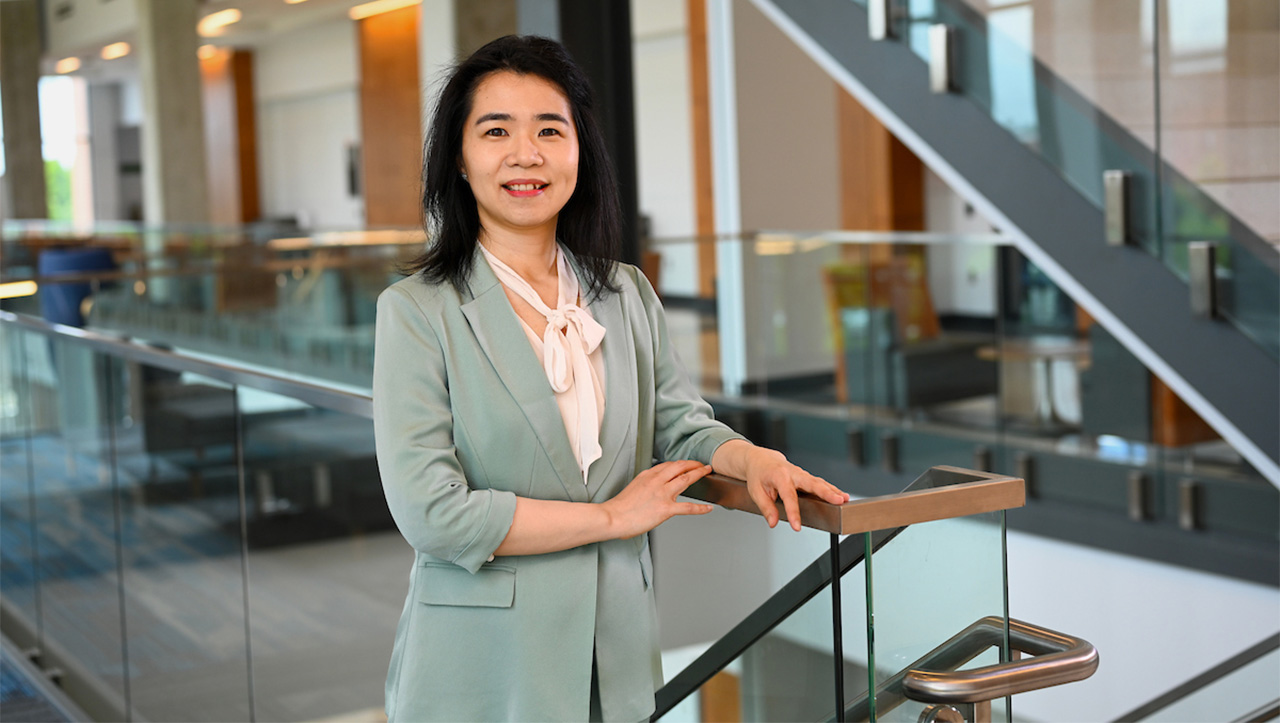
Colin Gabler, Hurston Endowed Professor of Marketing |
Here’s what that disconnect looks like up close. On paper, students now produce impeccable reports and slide decks. But work doesn’t live on paper; it lives in moments of unscripted interaction. When the conversation veers off the page, knowing what to say is different from knowing how to relate.
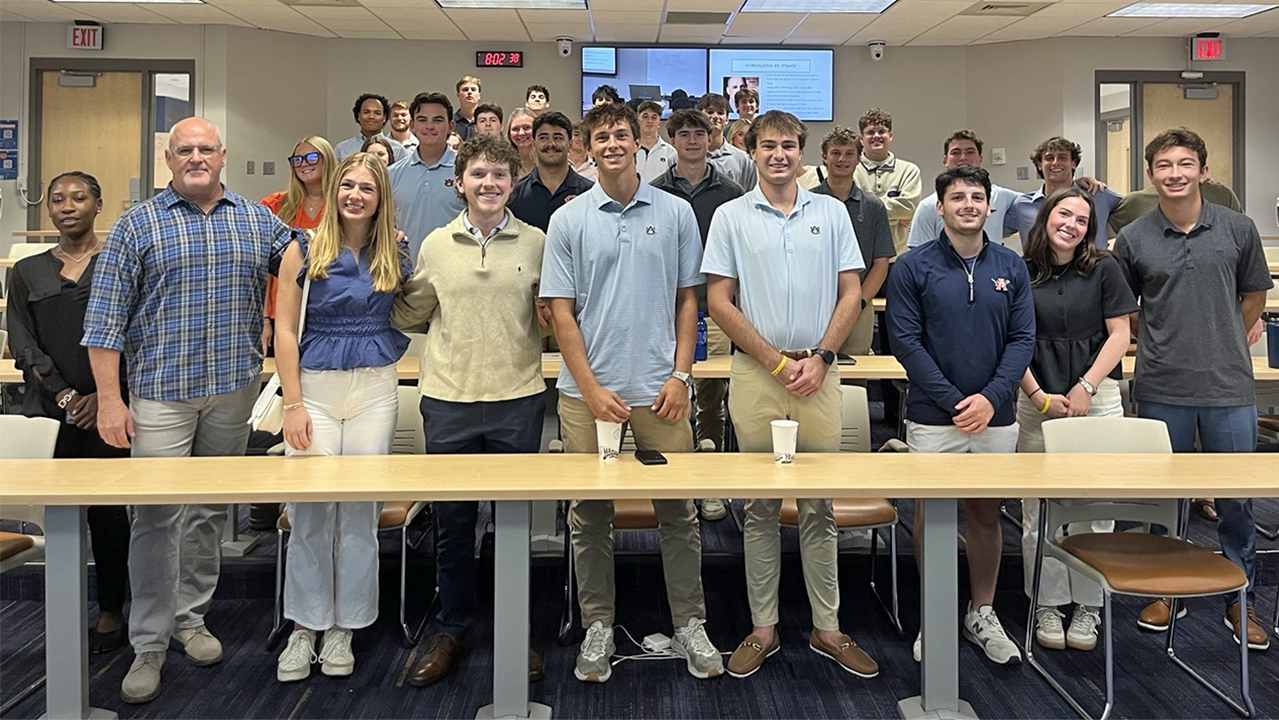
This tension plays out in the first assignment of my personal selling class: a live, five-minute mock sales call with another student. One confident senior arrived with a polished, AI-generated script outlining every stage of the sales process. But two minutes into the role play itself, her partner voiced a mild objection, a curveball I secretly provided. Silence. The script had no line for this moment, and the student found herself searching for anything to rebuild the flow.
That pause captures today’s entry-level reality: AI can draft the paperwork; only people can read a hesitation and rebuild trust. As automation absorbs more routine drafting and analysis, the premium on human connection keeps climbing.
The goalposts just moved (again)
When the information economy rose in the 1990s, computer-science majors and spreadsheet virtuosos became indispensable. Today, large language models write code and summarize quarterly reports faster than you can refresh your browser. In response, employers are no longer just looking for technological proficiency. Employers now expect 39-percent of workers’ core skills to change by 2030, which has even shifted the perceived value of a college degree.
What will replace them? In a word (or two): soft skills. The World Economic Forum’s latest skills outlook lists empathy and active listening inside the global top ten, alongside leadership and technological literacy. LinkedIn’s 2025 Workplace Learning data echoes the shift: hiring managers rank communication, adaptability, relationship-building, and strategic thinking ahead of most technical proficiencies, and 91 percent say soft skills weigh as much as hard ones in hiring decisions. The signal is clear: tomorrow’s edge is human.
Marketing scholars Roland Rust and Ming-Hui Huang call this a transition to The Feeling Economy: as AI climbs the thinking ladder, people move to an emotional ladder with rungs like intuition, persuasion, and genuine care. If they’re right, the next competitive advantage is not IQ or even EQ; it’s RQ (relationship quotient).
Yet many university curricula still treat social skills as a second-grade courtesy lesson and technical skills as the real preparation for adulthood. Graduates are fluent in APA format but uneasy about introducing themselves to a potential mentor.
Psychologist Barbara Fredrickson’s “broaden-and-build” theory shows that positive social emotions widen our cognitive repertoire, driving long-term gains in creativity and resilience.
The Harvard Gazette Study of Adult Development, an 86-year longitudinal project, found that relationship quality at age 50 predicts health at 80 better than cholesterol levels. And the U.S. Surgeon General’s 2023 advisory warns that chronic loneliness carries a mortality risk equivalent to smoking 15 cigarettes a day. Soft skills aren’t résumé fluff; they’re predictors of a good life.
We mandate Chemistry and Algebra II but leave “how to navigate disagreement” to chance. Economist Steven Levitt already tackled this problem on the math side, arguing that high-school algebra and trigonometry should give way to personal finance and data fluency because students will actually use them. Relationship skills deserve the same upgrade.
By the time students reach college, the gap has widened. I can usually tell within the first week who has had real exposure to soft-skill development and who has not. The result is a hidden curriculum that employers assume has been taught but most schools barely address. Some students pick up empathy and communication through family, mentors, or extracurriculars; others never get that chance. We would never rely on osmosis to teach calculus, yet we treat relational competence as something students should “just figure out.”
Teaching social and emotional intelligence isn’t about adding fluff. It’s about equity and preparation. Just as we formalize literacy and numeracy to ensure every student reaches a baseline, we should do the same for relationship skills. Instruction in empathy, collaboration, and conflict management gives every graduate—not just the well-connected—a fair start in both career and life.
The Relationship Literacy curriculum
Educators from pre-K through post-doc share a simple north star: graduate capable, ethical people who lead satisfying lives. We measure that success in grades, job offers, healthy relationships, and civic contribution. The challenge is alignment—and allocation of time. We still devote most classroom hours to what’s easy to score on a test, even as employers keep telling us they hire for what’s hard to automate (e.g., communication, curiosity, teamwork, problem-solving, asking questions, and adaptability).
So, what would the Relationship Literacy Curriculum look like?
Imagine a chemistry lab redesigned for conflict resolution, where students experiment not just with compounds but with ways to defuse tension and rebuild trust. Picture a syllabus that replaces one exam with a peer-feedback dialogue, requiring students to give and receive constructive criticism in real time. Or a capstone project that pairs business and engineering majors to co-design a product graded not just on output, but on how they listened, negotiated, and adapted along the way.
For administrators, the shift starts by making relational-literacy outcomes as explicit as quantitative reasoning. If seniors compile a writing portfolio, ask them to assemble a conversation portfolio: recorded role-plays annotated for empathy markers, a kind of “real-time pedagogical demonstration.” Faculty can trade one slide-dense lecture for a live exercise. Grade the feedback loop, not just the final document.
AI already checks citations; students need practice navigating discomfort. If we want the next generation to thrive in an AI workplace, relational fluency must move from the extracurricular margins to the assessment core.
Closing the loop on the role-play
That senior who froze during the first role-play asked to try again after a week of practice. She focused less on perfect phrasing and more on listening for cues. During the second attempt, when her partner raised an objection, she paused, acknowledged the concern, and steered the conversation forward.
A month later she emailed to say the same approach helped her connect during an interview—and secure the job. The chatbot script never came up.
Automation isn’t eliminating white collar work; it’s reshaping it. By moving routine tasks off our plates, technology frees learners to master the distinct human abilities machines still lack. Our classrooms should make the most of that opportunity, starting with a handshake, a question, and the willingness to stay in the conversation when the script runs out.
###